Designed by Architect Dharam Patel | Art & Architecture Associates
Firm: Art & Architecture Associates, Vadodara
Scope: Interior Architecture | Spatial Design | Furniture Design | Lighting Design
Design Team: Dharam Patel, Keta Shah, Team Art & Architecture Associates
Location: Mementos by ITC Hotels Ekaaya, Udaipur, Rajasthan, India
Project Type: Hospitality – Fine Dining Restaurant
Client: Mr. Vijendra Singh (H.G. Infra Eng Construction Engineering Company)
Manufacturing Partner: Sumer Interiors Pvt Ltd (SIPL)
Art & Craft Collaborators: Monalisa Arts by Mohan Lal Kumawat, Ritesh Rajput
Additional Contributors: Taral Shah
Reimagining the Royal Dining Experience
Royal Vega Restaurant is envisioned as more than just a dining venue. The project aims to recreate the experience of dining within a royal palace while maintaining the sophistication expected in a contemporary luxury hospitality environment.
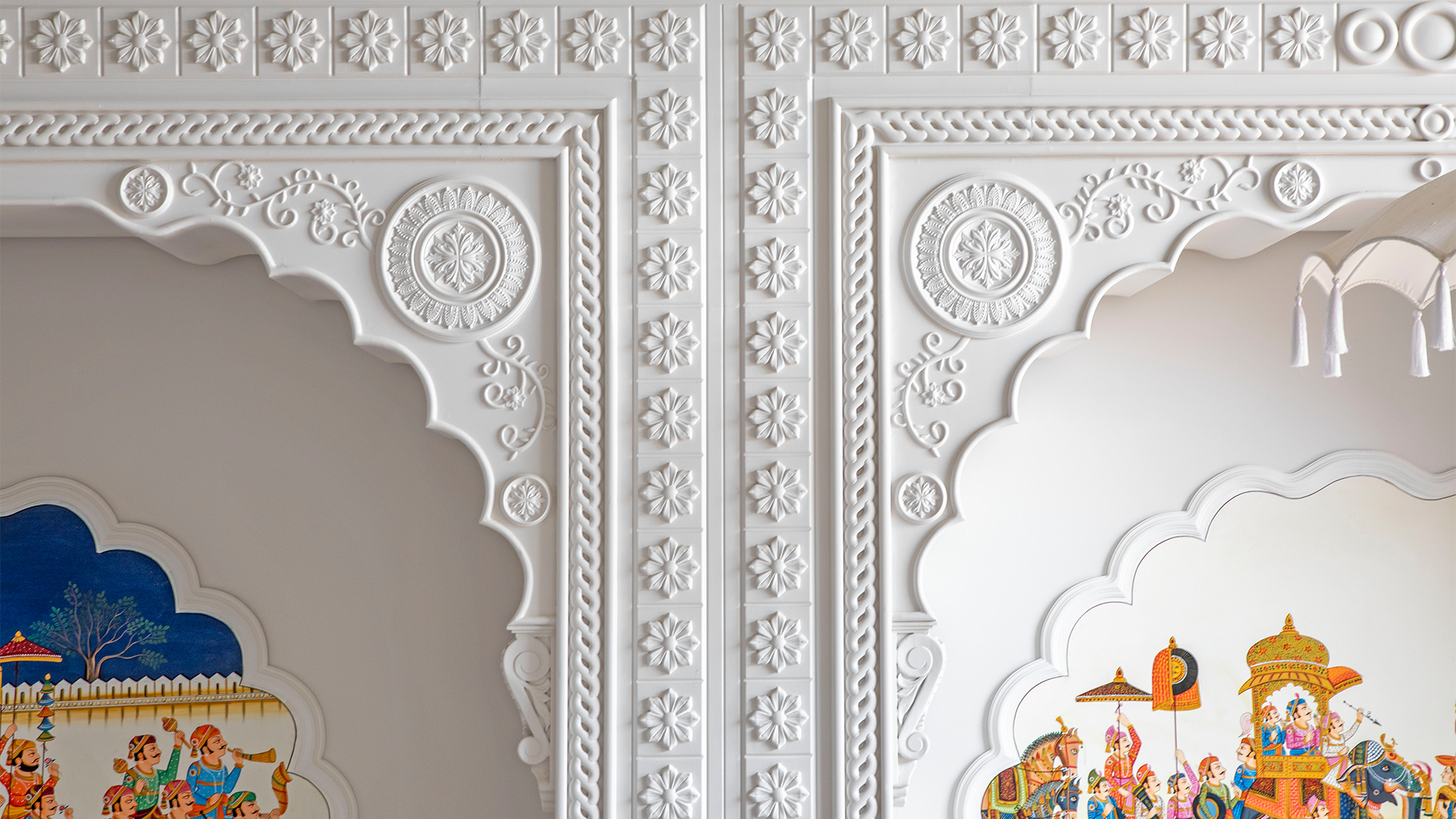
Traditional Rajasthani architecture has always been associated with grandeur, ornamentation, and rich craftsmanship. Palaces and royal residences across the region are characterised by elaborate decorative motifs, carved elements, and symbolic references to royal culture. The design for Royal Vega draws inspiration from this architectural language and translates it into a modern interior environment.
Rather than directly replicating historic styles, the project interprets them through contemporary materials, lighting design, and furniture detailing. This approach ensures that the restaurant maintains authenticity while remaining relevant to modern hospitality standards.
Concept and Cultural Inspiration
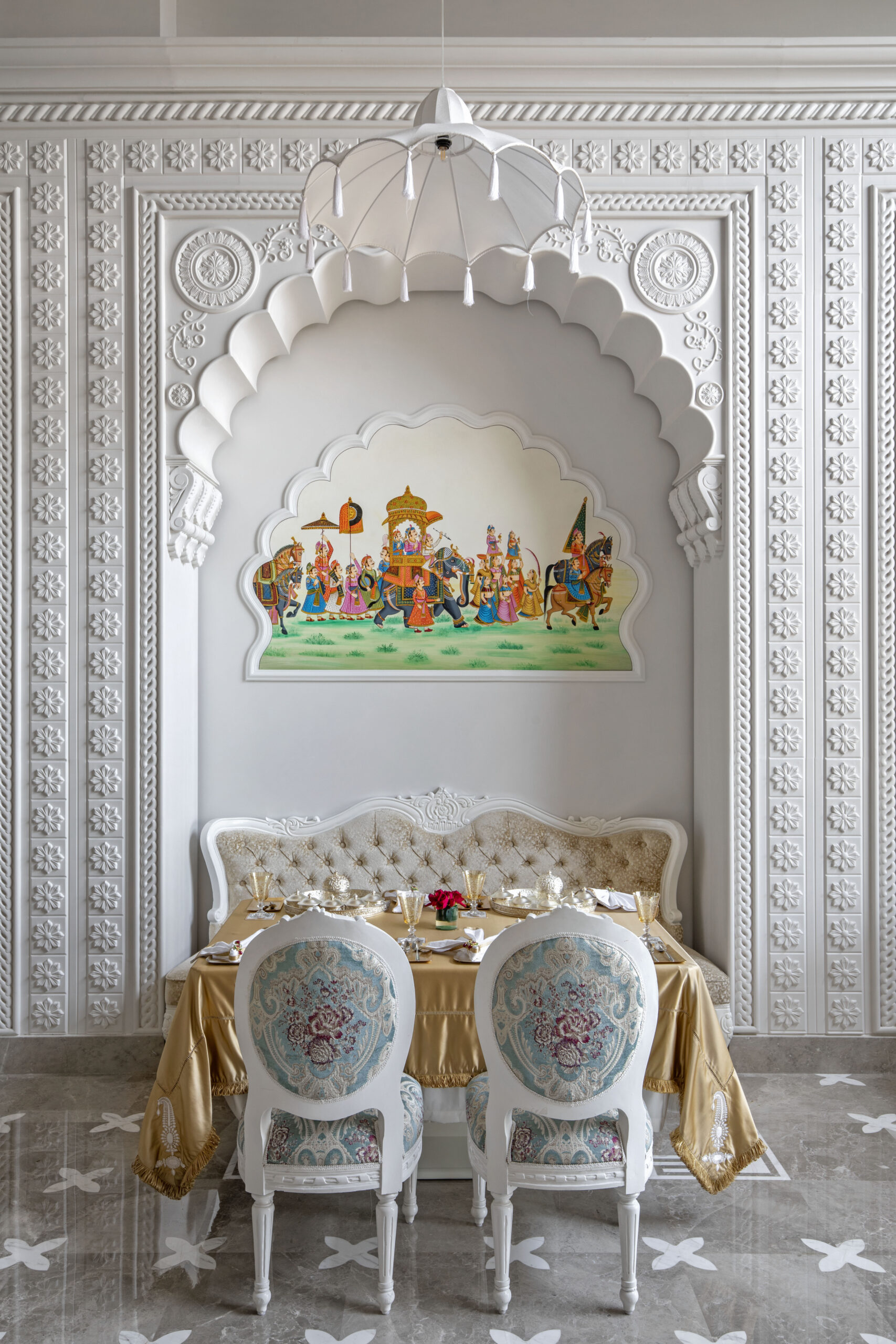
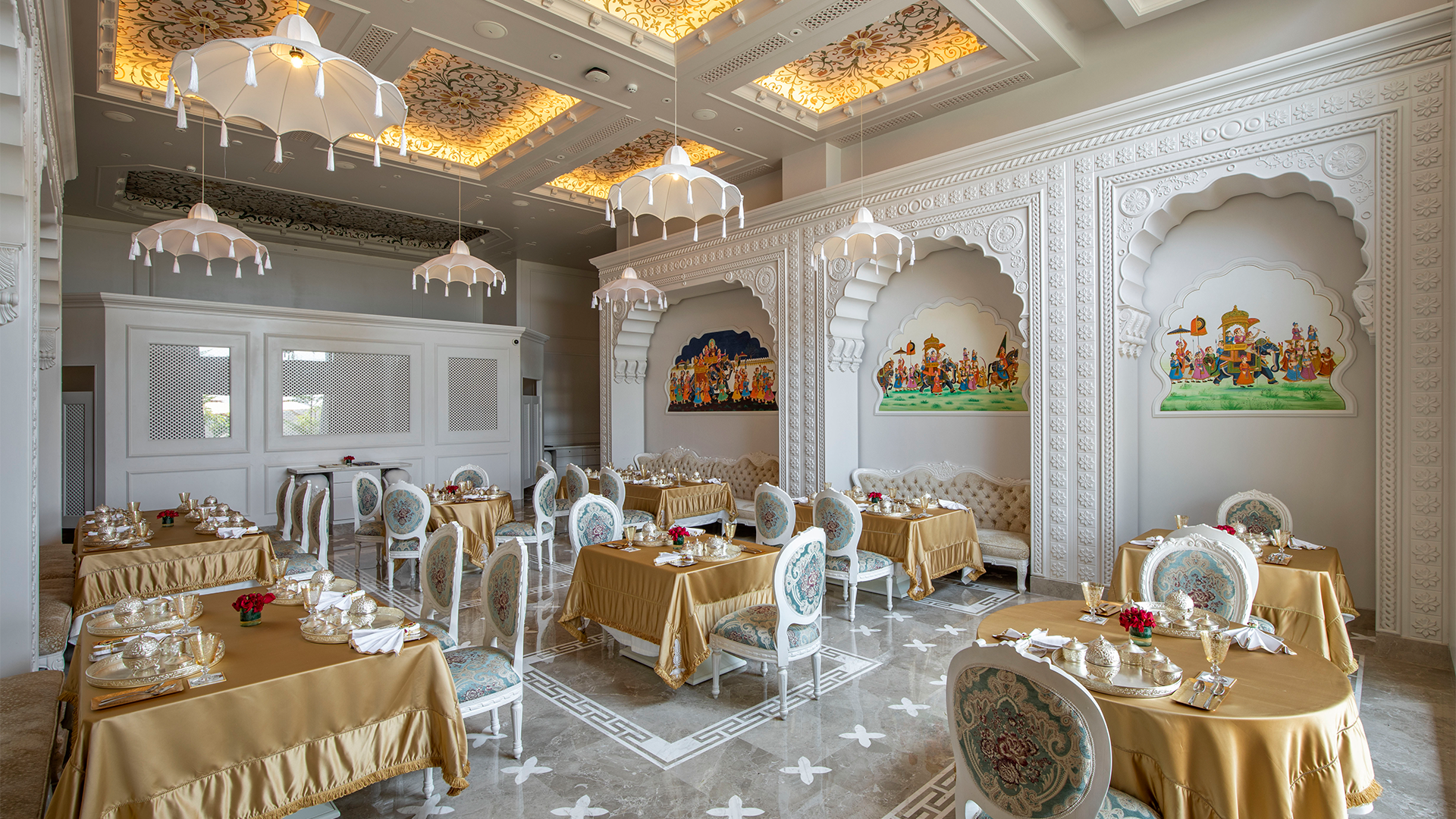
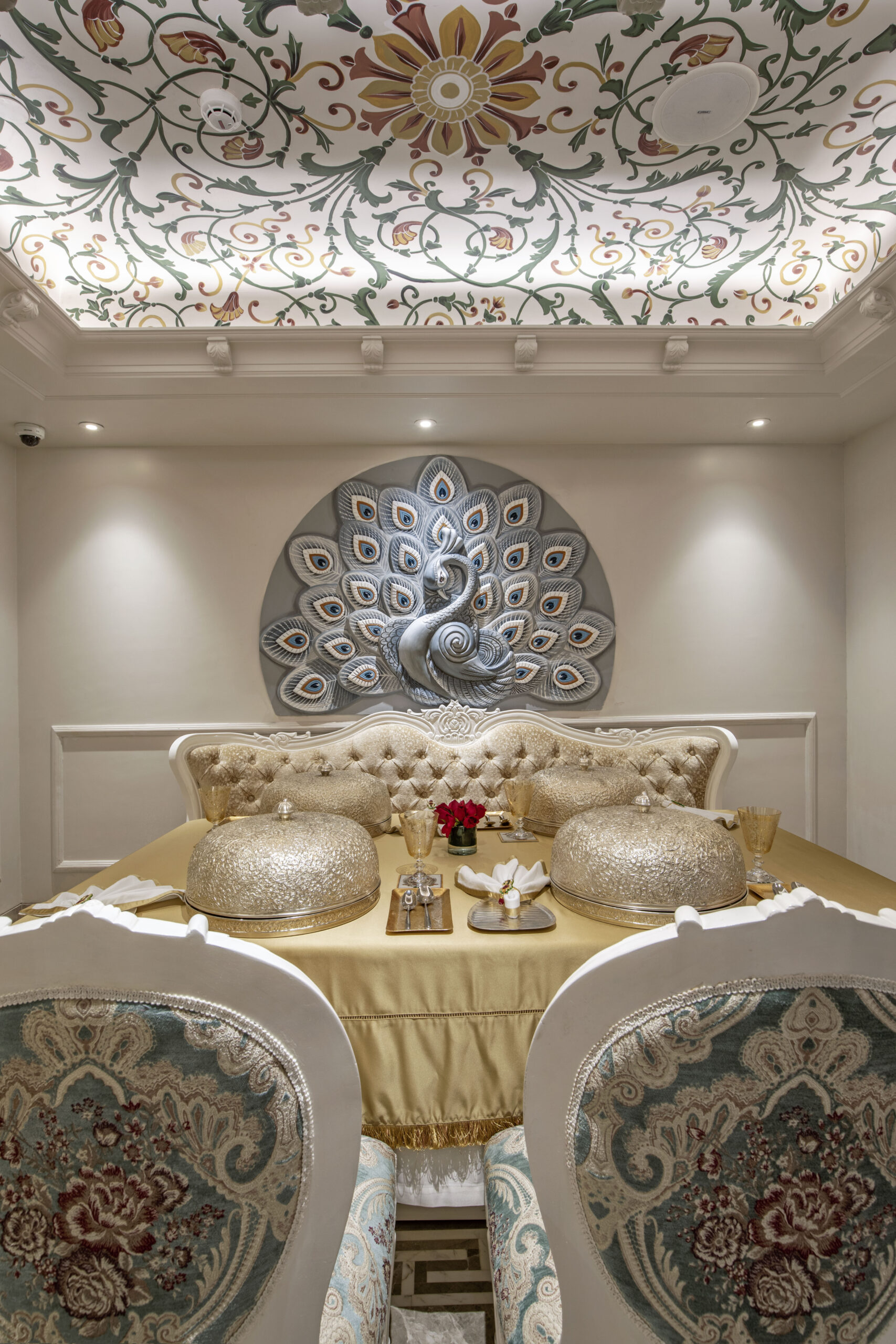
The conceptual framework of the restaurant is rooted in Rajasthan’s royal heritage. The design draws upon visual symbols historically associated with royalty and power, including elephants, horses, and peacocks. These motifs have been incorporated into the interior through engraved panels, decorative elements, and curated artwork.
These symbolic references create a narrative within the space, connecting visitors with the cultural traditions of the region. The design celebrates not only architectural heritage but also the artistic practices that have shaped Rajasthan’s cultural identity for centuries.
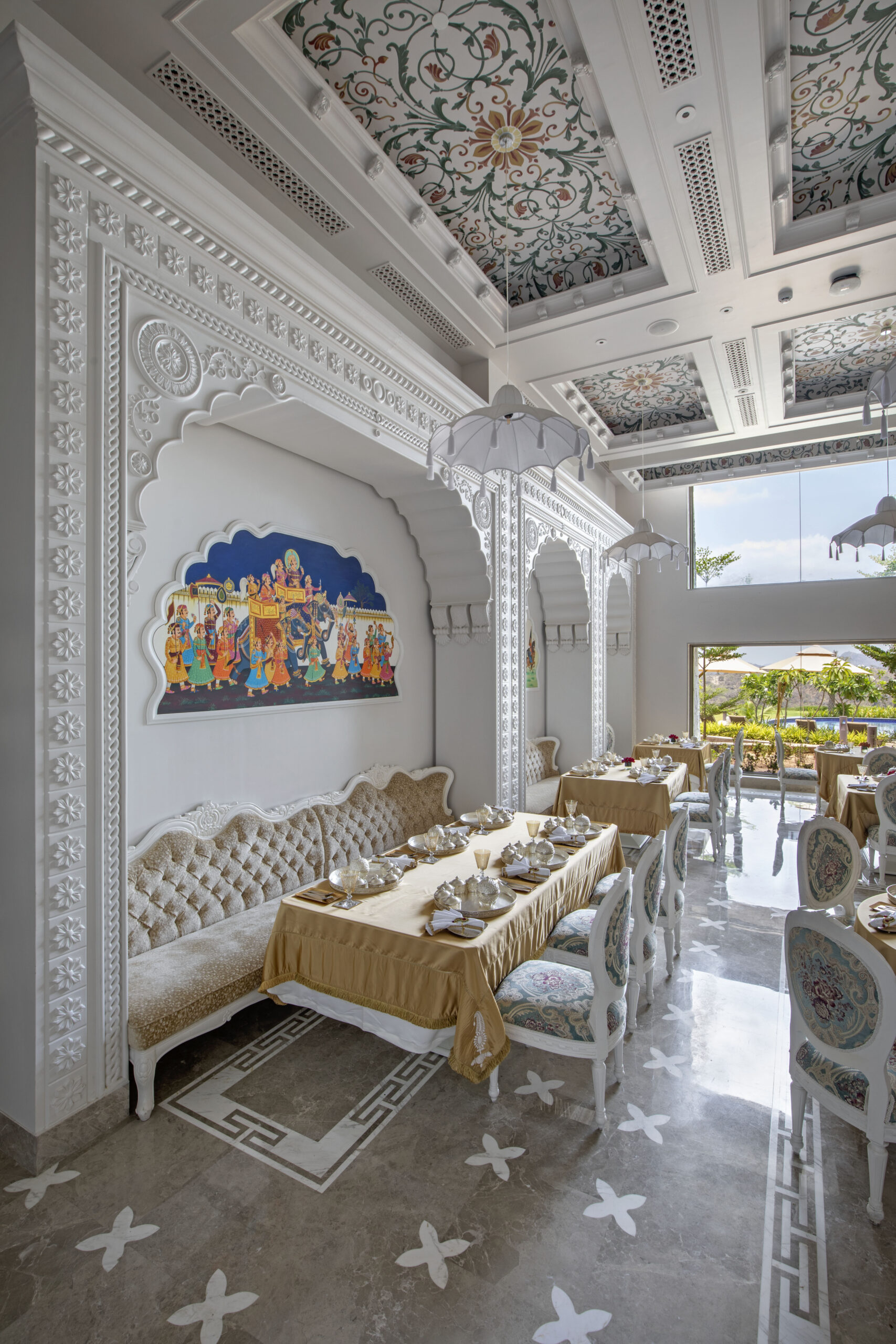
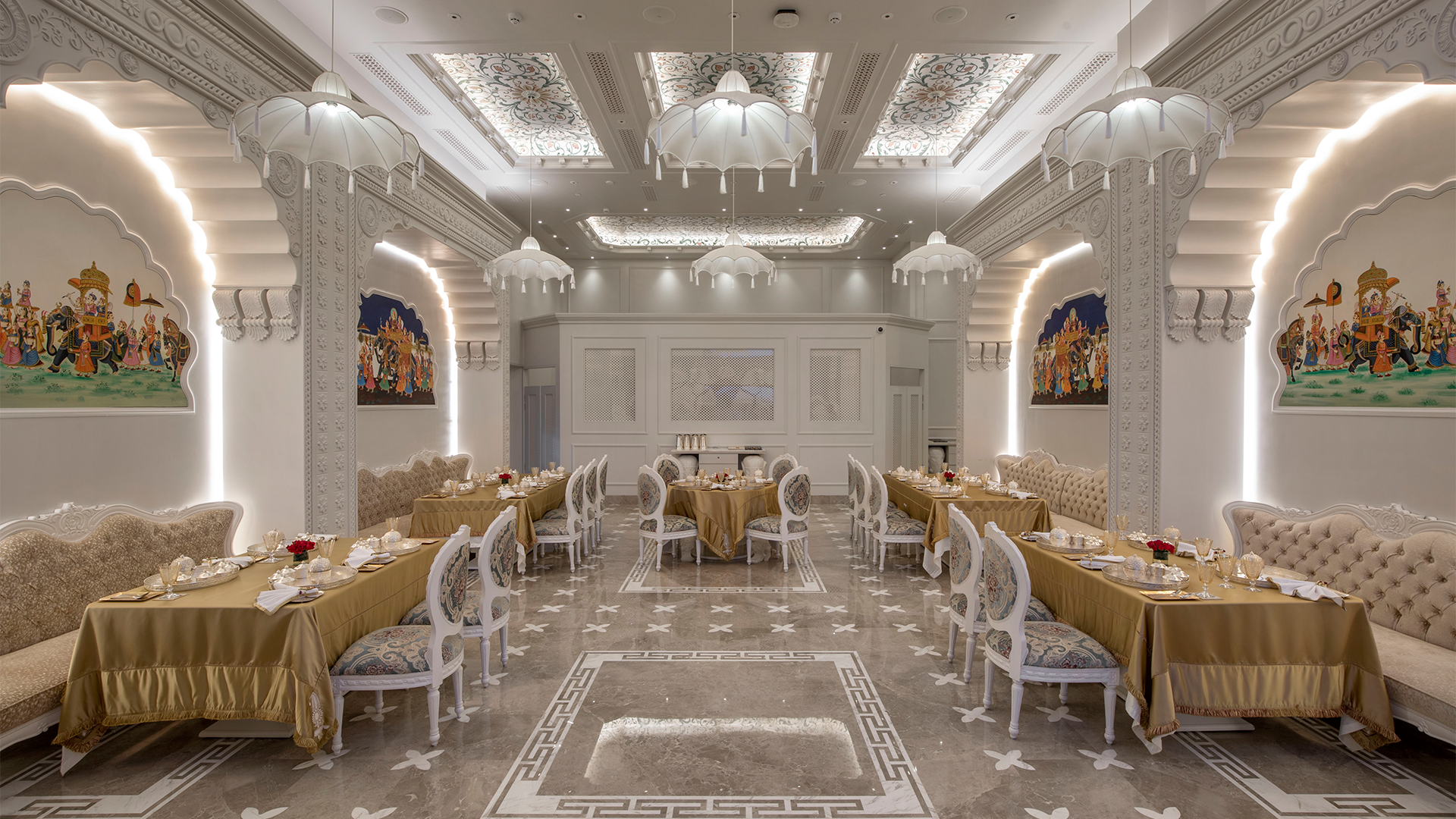
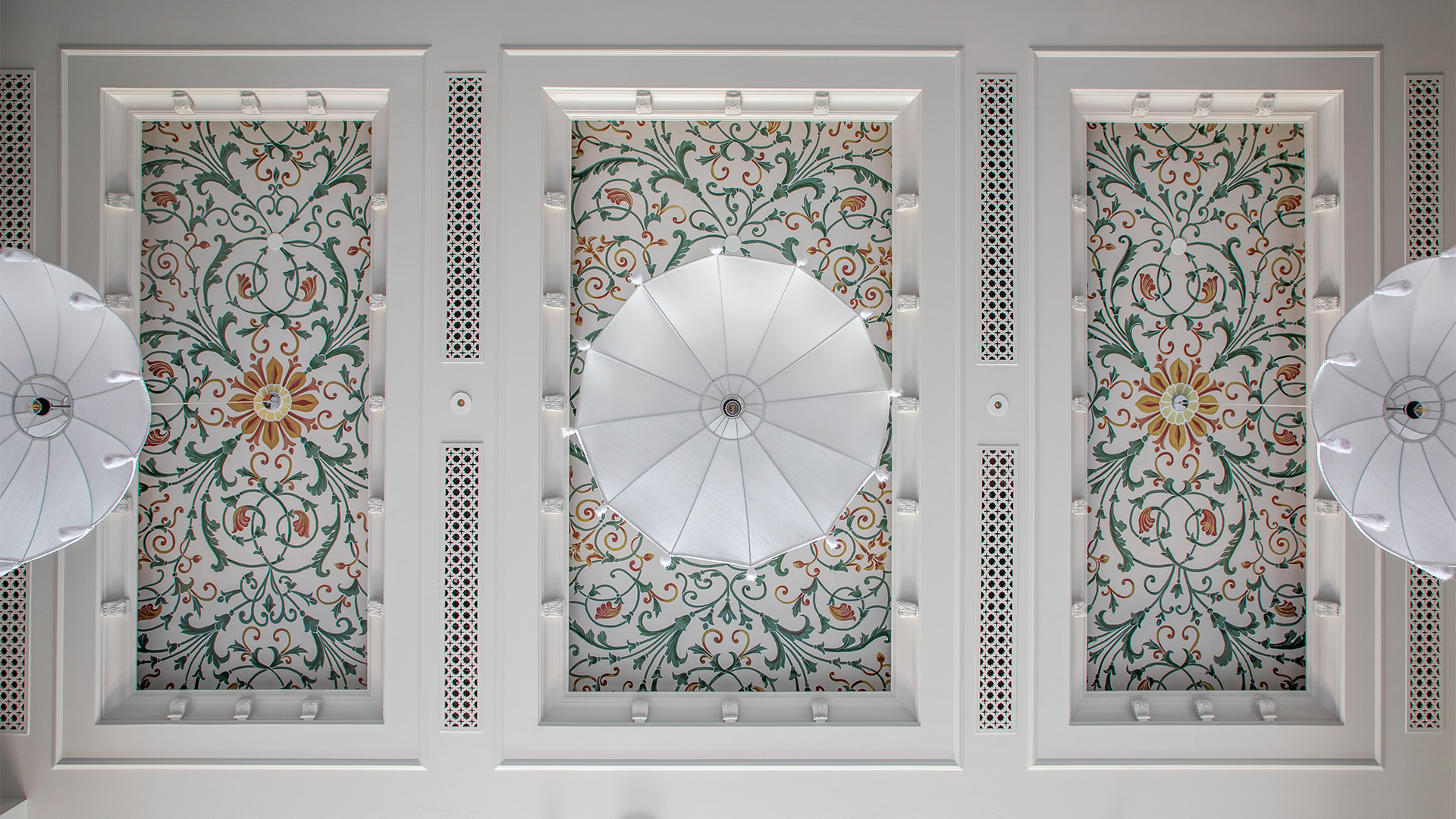
One of the most distinctive design gestures within the restaurant is the reinterpretation of Chhatris, the iconic domed pavilions or royal umbrellas commonly seen in Rajasthani palaces and cenotaphs. In the restaurant interior, these elements are reimagined as pendant lighting installations suspended from the ceiling.
These sculptural lights function both as decorative features and as an important spatial element, establishing the visual identity of the dining space while referencing traditional architecture in an innovative way.
Spatial Organisation and Dining Environment
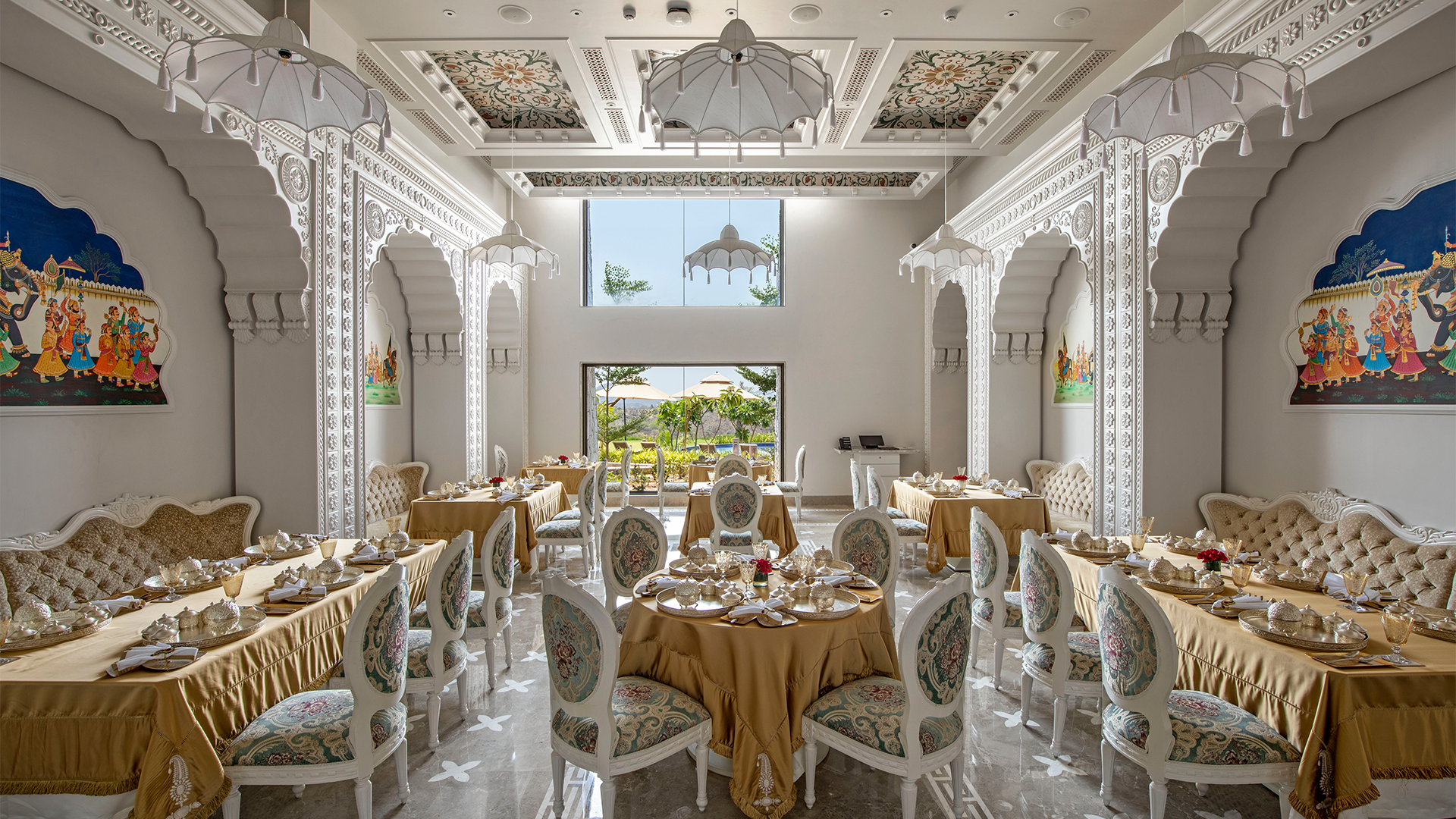
The spatial layout of the restaurant has been carefully planned to create a comfortable yet luxurious dining experience. The arrangement includes a variety of seating configurations that cater to different dining preferences, ranging from intimate tables for couples to larger tables designed for families or group gatherings.
Semi-private alcoves and carefully positioned seating clusters create a sense of intimacy without isolating diners from the overall atmosphere of the restaurant. This layered spatial arrangement allows the space to feel lively and vibrant while still maintaining moments of privacy and comfort.
Lighting plays a significant role in shaping the spatial experience. The Chhatri-inspired pendant lights create focal points throughout the dining area, while concealed lighting highlights architectural surfaces and decorative elements. Together, these lighting strategies produce a warm and celebratory ambience that enhances the dining experience.
Craftsmanship and Decorative Detailing
A defining aspect of the Royal Vega Restaurant is its emphasis on craftsmanship. Rajasthan has a long tradition of skilled artisans who specialise in stone carving, painting, and decorative arts. The design celebrates these traditions by incorporating handcrafted elements throughout the interior.
Engraved panels, ornamental cornices, and decorative surfaces have been created by local artisans, bringing authenticity and cultural depth to the space. These handcrafted elements ensure that the restaurant does not simply represent heritage visually but actively supports the continuation of traditional craft practices.
Artwork and decorative installations curated from regional artists further enrich the interior environment, reinforcing the connection between the restaurant and Rajasthan’s cultural landscape.
Material Palette and Interior Character
The interior palette of the restaurant reflects the richness associated with royal architecture. Surfaces are treated with warm tones and intricate patterns, creating depth and visual interest throughout the space.
Furniture has been designed to complement the regal theme of the interior. Elegant seating forms, upholstered with patterned fabrics and finished with gold-toned accents, enhance the luxurious character of the dining environment.
Table settings and silverware have also been carefully selected to align with the overall concept of royal dining. These details contribute to the immersive atmosphere, ensuring that every element of the experience—from architecture to tableware—reflects the cultural narrative of the space.
Integration of Art and Hospitality
Royal Vega Restaurant demonstrates how hospitality design can function as a platform for cultural storytelling. Through the integration of traditional motifs, local craftsmanship, and carefully curated artwork, the restaurant becomes more than a place to dine—it becomes a space where guests engage with the artistic heritage of Rajasthan.
The project successfully balances cultural authenticity with contemporary comfort, allowing visitors to experience the richness of regional traditions within a modern luxury setting.
Architecture as Cultural Narrative
At its core, the design of Royal Vega Restaurant is about translating cultural memory into spatial experience. By drawing inspiration from Rajasthan’s royal architecture and artistic traditions, the project creates a dining environment that feels both timeless and immersive.
Rather than relying solely on visual decoration, the design integrates heritage elements into the architecture, lighting, furniture, and material palette. This holistic approach ensures that the restaurant communicates a cohesive narrative rooted in place and culture.
Through this thoughtful integration of design, craftsmanship, and hospitality, Royal Vega Restaurant offers guests a unique dining destination where the flavours of regional cuisine are complemented by the richness of Rajasthan’s architectural heritage.