Project Name: Tanishq Office
Architect: Dharam Patel
Architecture & Interior Firm: Art & Architecture Associates
Project Type: Commercial Interior (Office)
Project Area: 3997 sq. ft.
Location: Karelibagh, Vadodara, Gujarat, India
Project Year: 2024
Introduction
The Tanishq Office in Vadodara is conceived as a contemporary workspace that redefines conventional office environments through a seamless blend of fluid spatial design and structured geometry. Designed by Art & Architecture Associates, the project transforms a standard commercial interior into a dynamic, human-centric workplace that enhances productivity, interaction, and well-being.
Rather than treating the office as a rigid functional setup, the design explores how movement, form, and light can create an engaging and inspiring work environment.
Client’s Brief
The client envisioned an office that would:
-
Reflect a strong, contemporary identity
-
Provide efficient and flexible workspaces
-
Encourage interaction and collaboration
-
Address the challenges of a typical commercial office layout
-
Create a comfortable and visually appealing environment
The goal was to move beyond a standard office setup and create a space that feels open, fluid, and experience-driven.
Design Concept
The core idea revolves around the fusion of fluidic forms with cubist geometry.
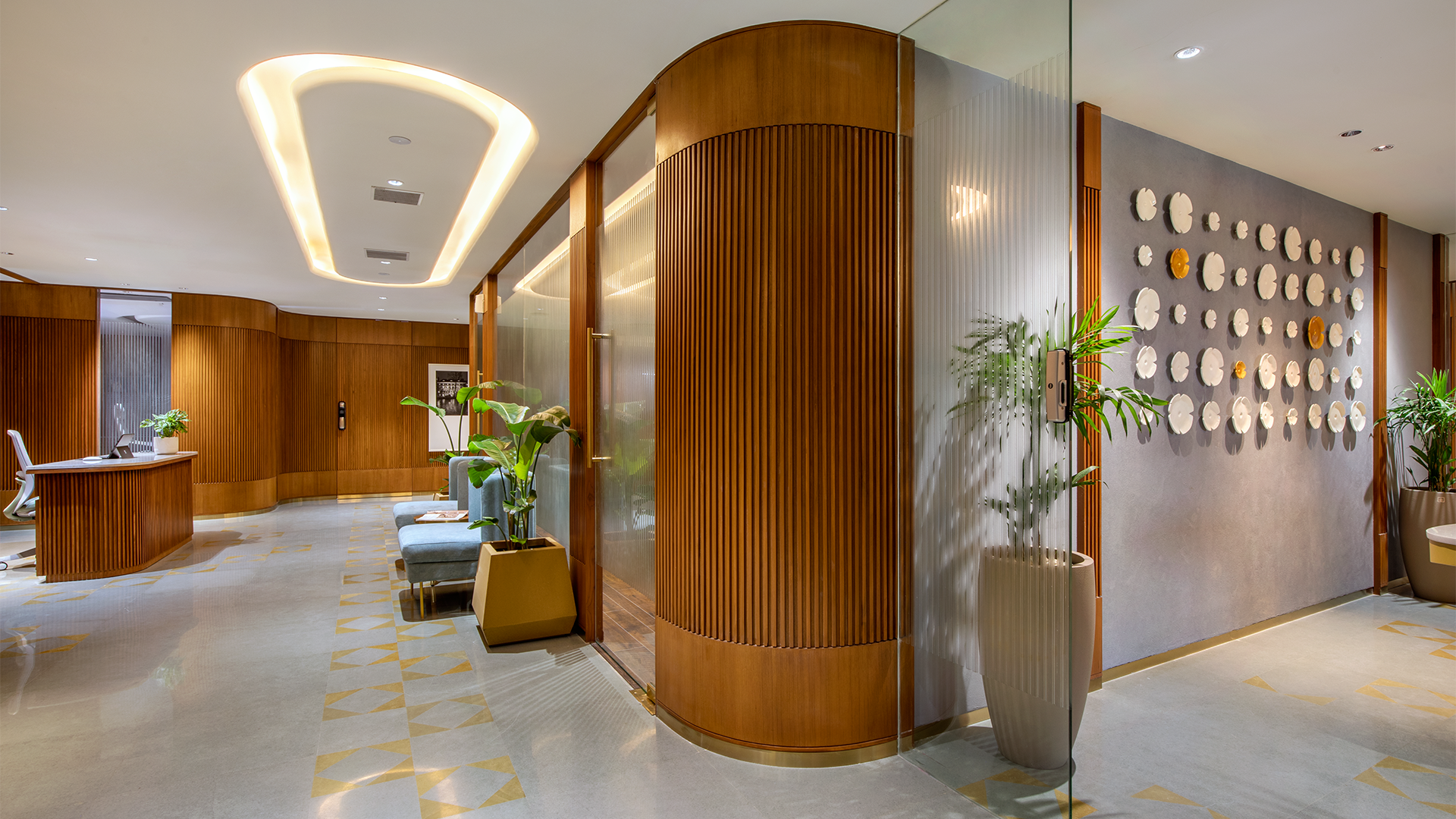
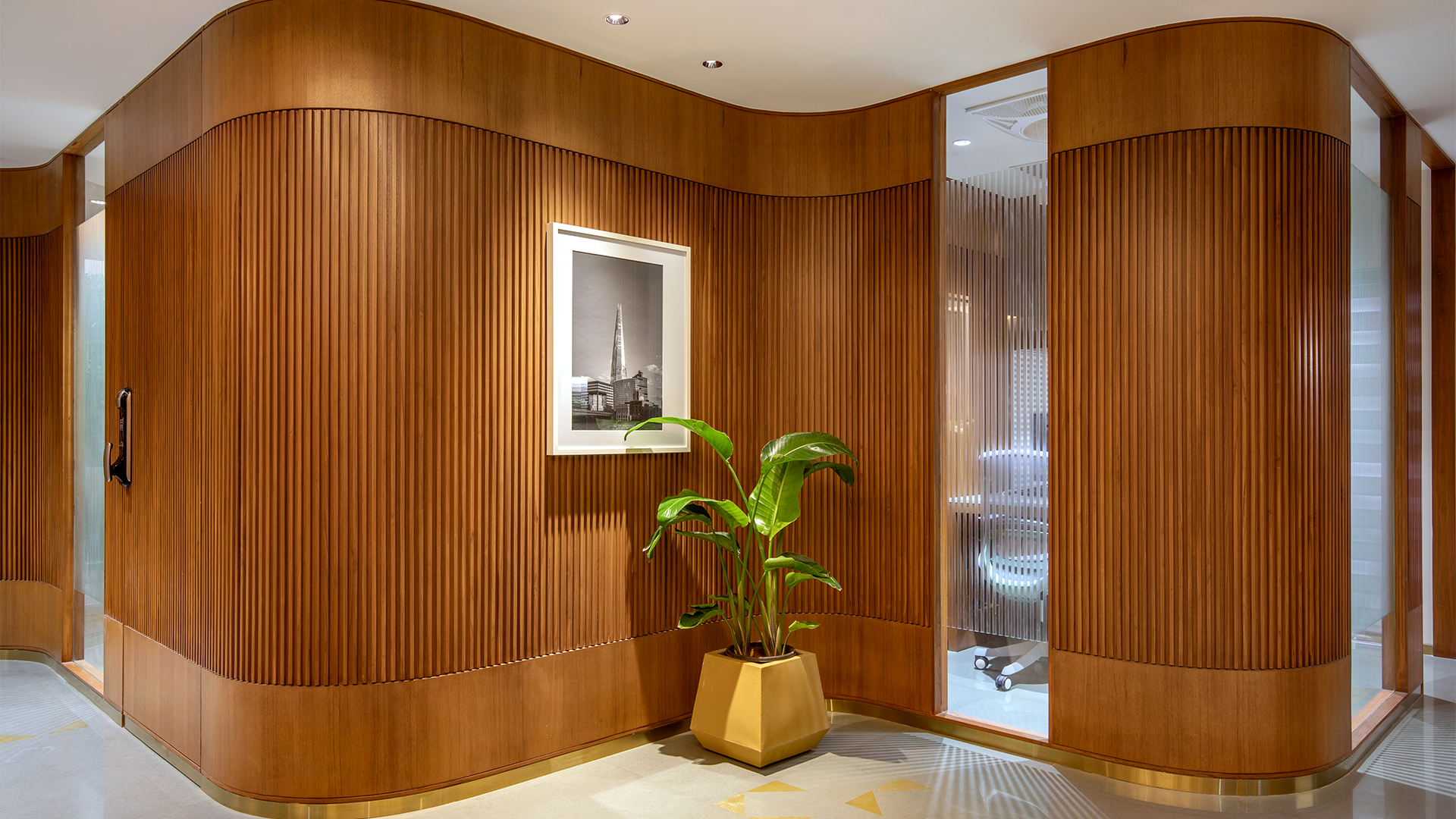
Instead of rigid partitions and straight corridors, the design introduces soft curves and sculptural surfaces, allowing spaces to flow into one another. This creates:
-
A sense of continuity and openness
-
Smooth spatial transitions
-
A more organic and engaging user experience
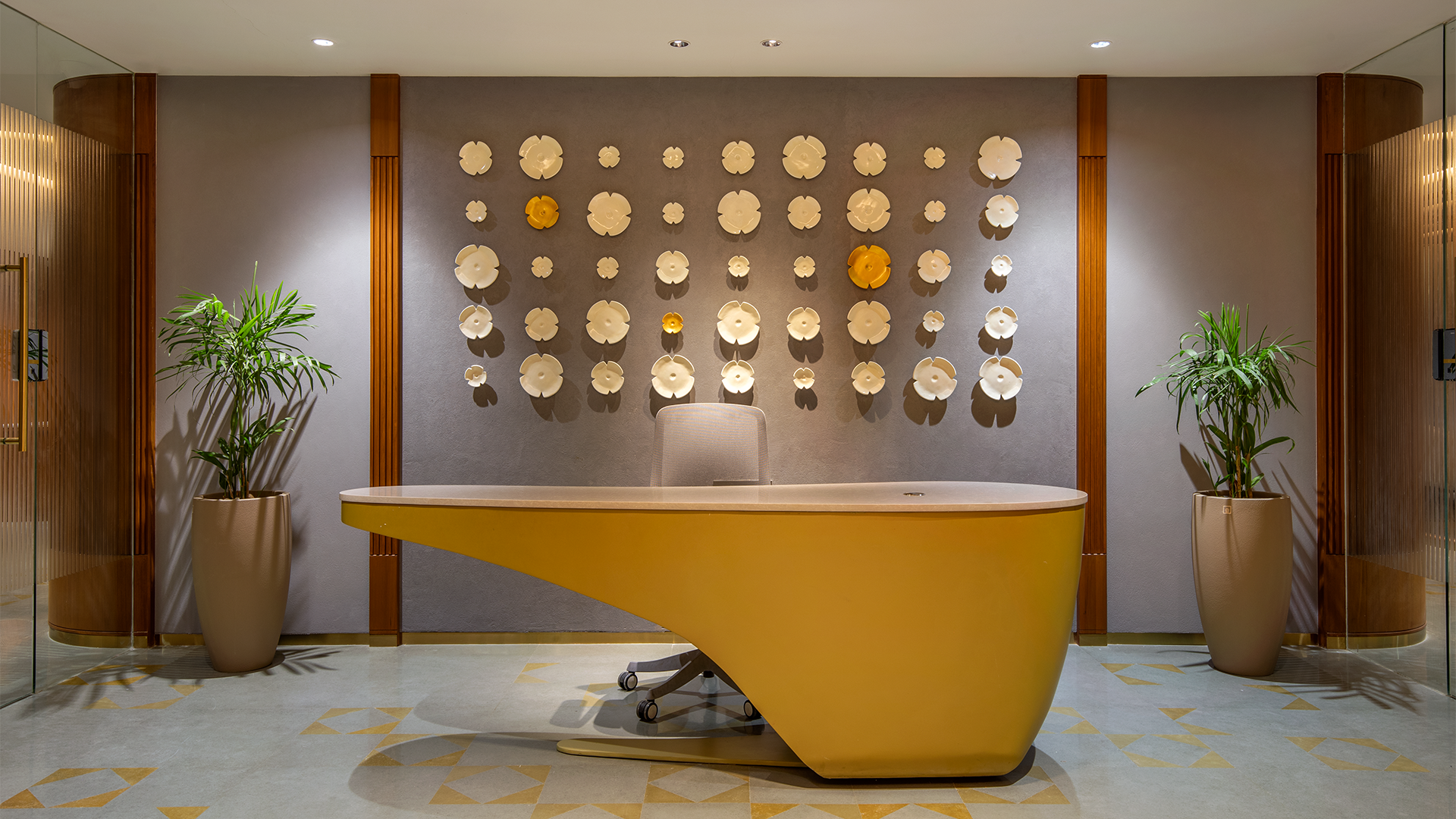
The contrast between curved wooden forms and structured planning establishes a strong visual identity while maintaining functional clarity.
Spatial Planning
The office is carefully organized to balance functionality, openness, and flexibility.
Key Components:
-
Reception & waiting areas
-
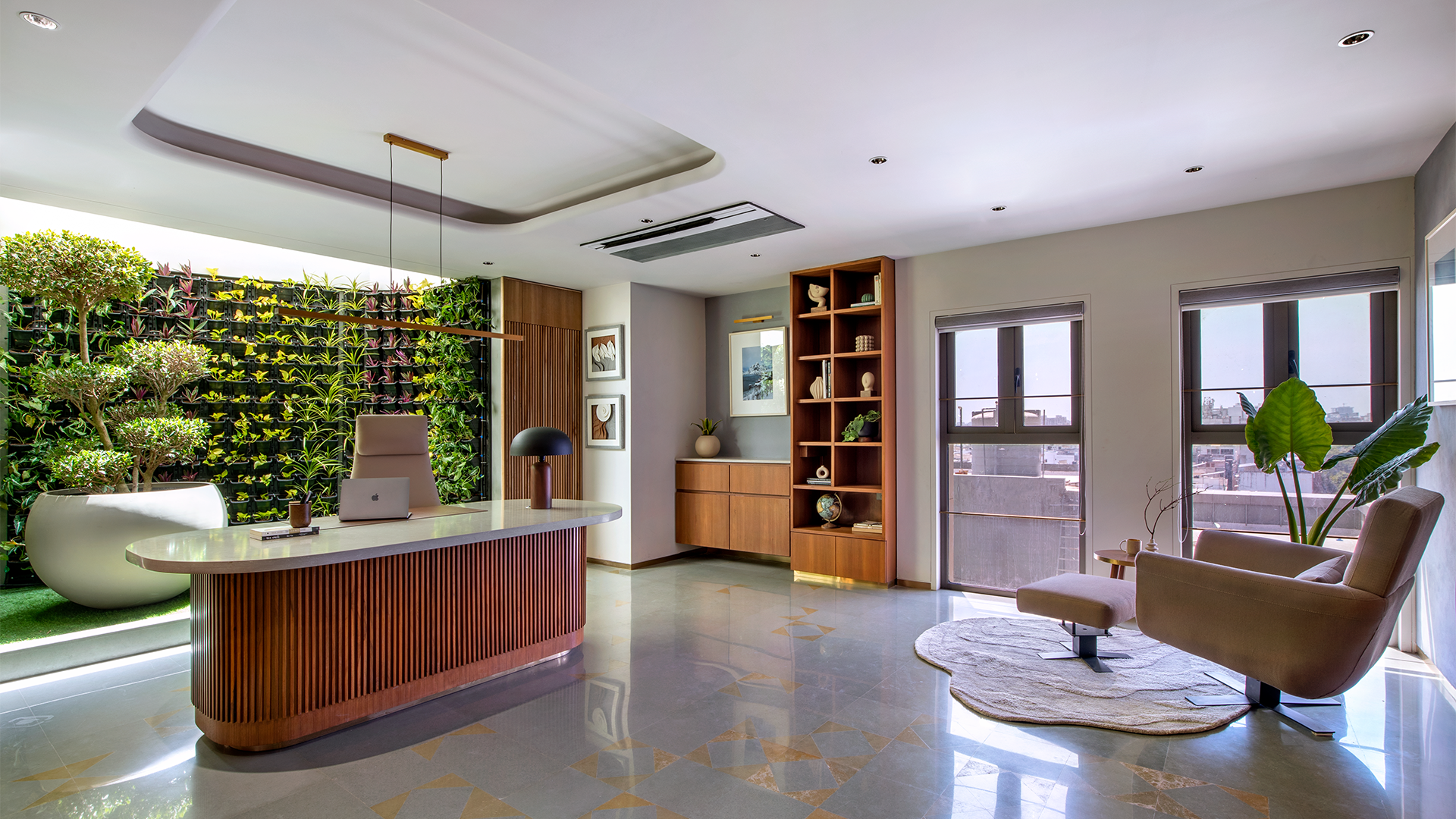
Multiple director cabins
-
Workstations
-
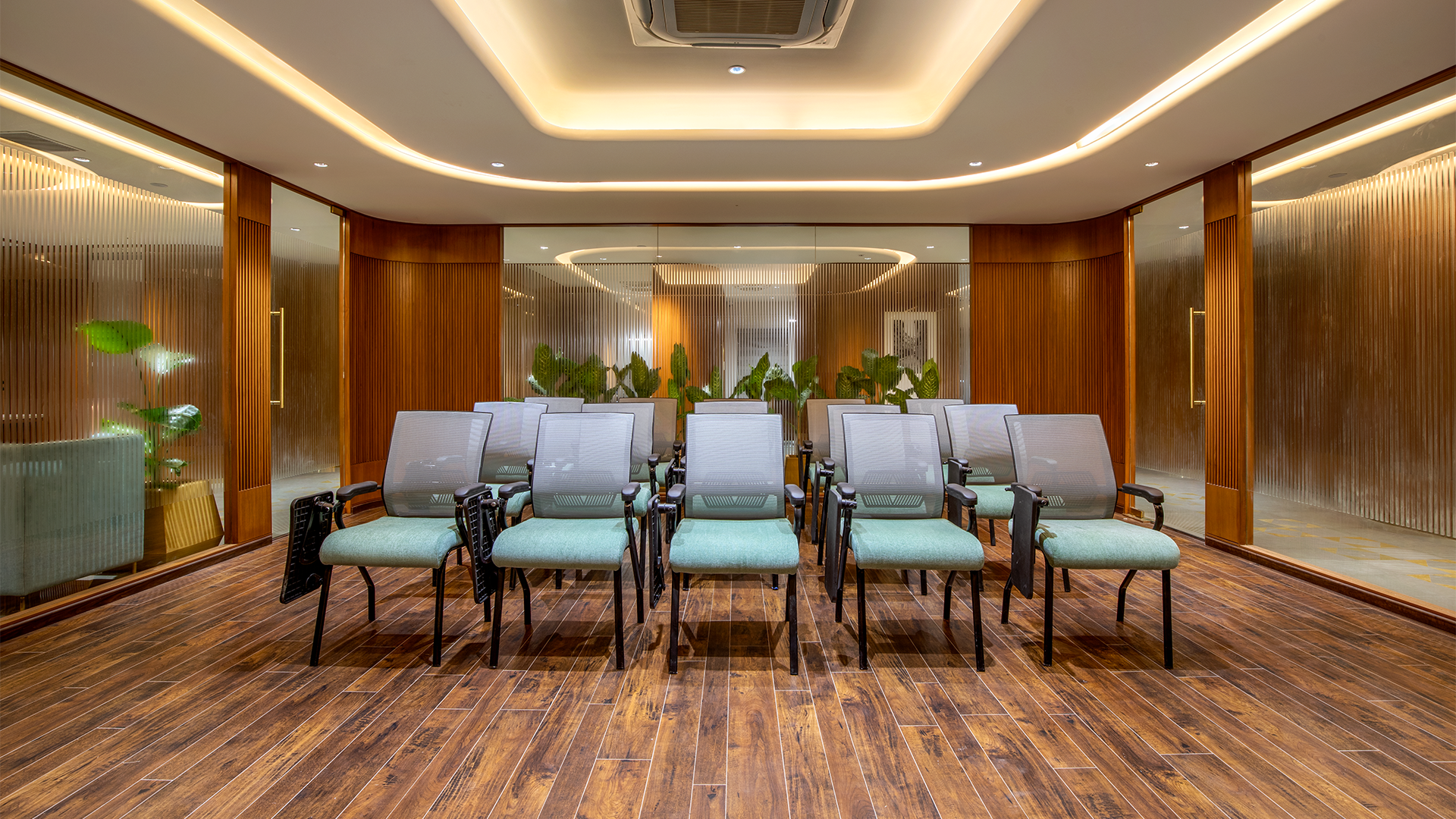
Seminar / training room
-
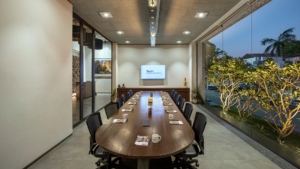
Board room
-
Accounts and support spaces
-
Pantry & dining areas
At the heart of the layout is a central open zone, designed as a multi-functional space that supports:
-
Meetings
-
Training sessions
-
Team interactions
-
Informal gatherings
This central space acts as a social and functional nucleus, enhancing communication and collaboration within the office.
Spatial Experience
The design prioritizes user experience and movement within the space.
-
Curved partitions guide circulation naturally
-
Visual connections between spaces enhance openness
-
Informal seating areas create moments of pause
-
Transparency improves communication and workflow
The result is an office that feels fluid, interactive, and less hierarchical, promoting a healthy working culture.
Materiality & Aesthetics
The material palette is minimal yet expressive, focusing on warmth and sophistication.
Key Elements:
-
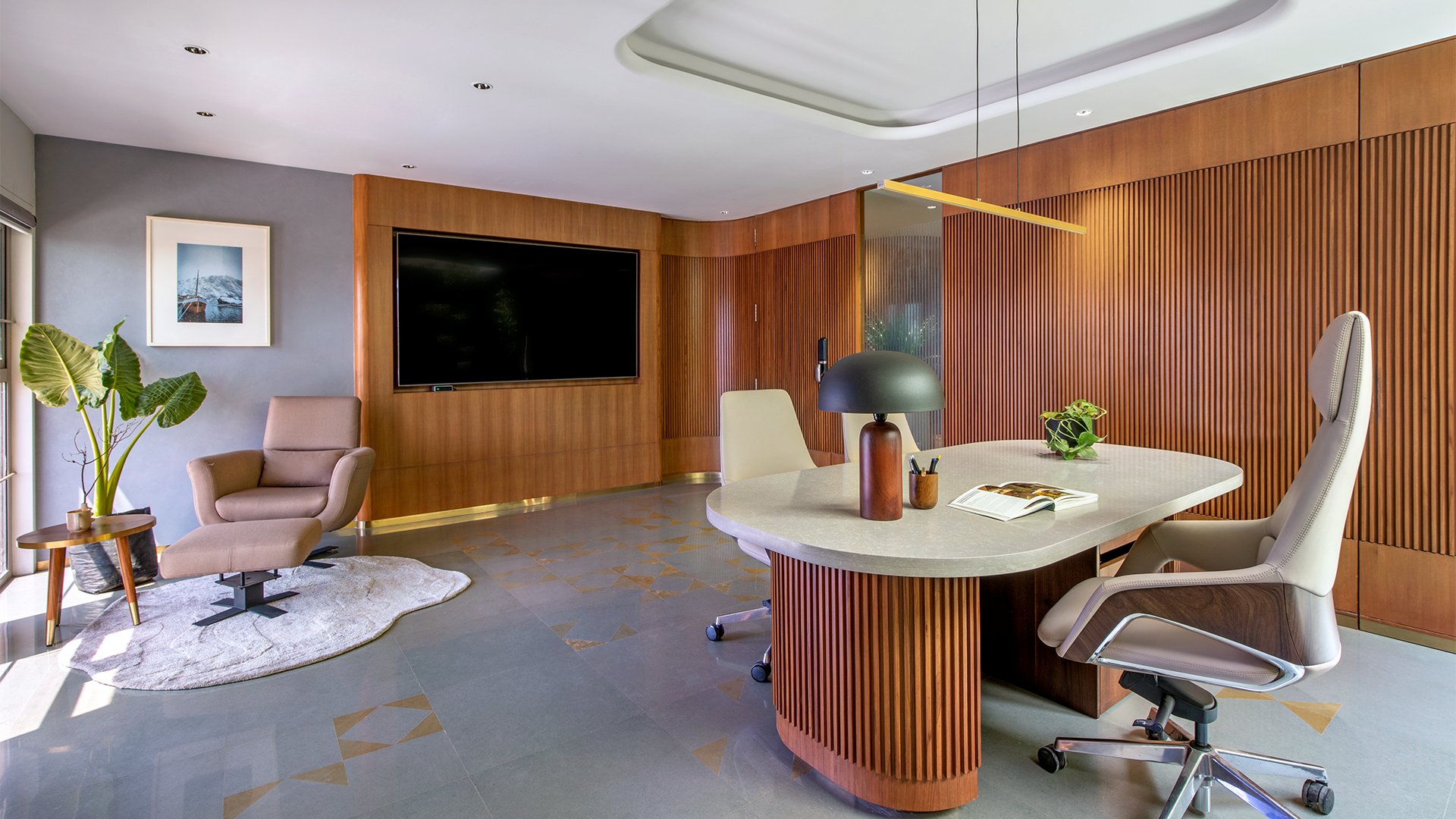
Wooden finishes with vertical fluting create rhythm and softness
-
Neutral flooring with subtle patterns adds visual interest
-
Metal accents introduce refinement and contrast
-
Glass partitions maintain transparency while defining spaces
The use of curved wooden surfaces becomes a defining design language, giving the office a sculptural identity.
Lighting Strategy
Lighting plays a crucial role in shaping the atmosphere.
-
Natural light is maximized to create bright, airy interiors
-
Soft diffused artificial lighting enhances comfort
-
Feature ceiling lights follow organic forms, reinforcing the design language
This reduces dependence on artificial lighting during the day while improving user well-being.
Landscape Integration
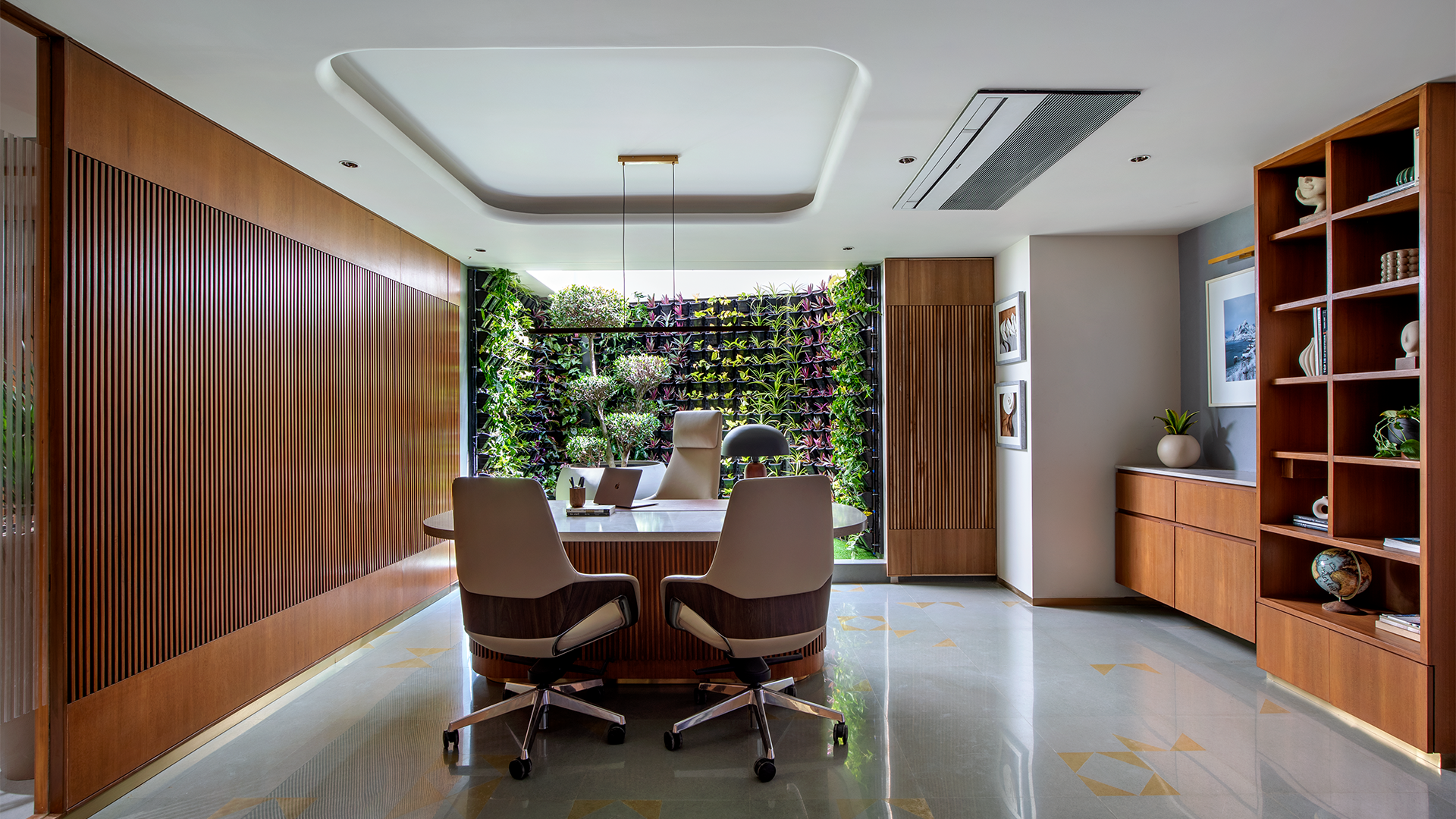
A key highlight of the project is the integration of indoor landscape elements.
-
Green pockets improve air quality
-
Plants soften the built environment
-
Visual connection to greenery enhances mental well-being
These interventions create a workspace that feels calm, refreshing, and balanced.
Sustainability Approach
The project incorporates sustainability through simple yet effective strategies:
-
Efficient use of space to reduce wastage
-
Minimal material palette
-
Maximum use of natural daylight
-
Integration of greenery for passive cooling and comfort
The design demonstrates that sustainability can be achieved through thoughtful planning rather than complex systems.
Design Process
-
Understanding Client Needs – Functional requirements and identity
-
Concept Development – Fluid + geometric spatial language
-
Planning – Open layout with central interaction zone
-
Material Selection – Warm, minimal, and durable finishes
-
Lighting & Landscape Integration – Enhancing comfort and experience
-
Execution – Precision in curves, detailing, and finishes
Experience
The Tanishq office is designed as an experience rather than just a workspace:
-
Movement feels intuitive and continuous
-
Spaces encourage both focus and interaction
-
Natural light and greenery improve mood and productivity
-
The environment feels professional yet welcoming
The architecture acts as a silent facilitator, supporting daily work while enhancing overall well-being.
Impact
The project demonstrates how interior architecture can transform work culture.
-
Breaks away from rigid office typologies
-
Promotes collaboration and openness
-
Enhances employee comfort and productivity
-
Creates a strong and memorable spatial identity
Conclusion
The Tanishq Office stands as a refined example of contemporary workplace design, where form, function, and experience are seamlessly integrated.
By combining fluid design, minimal materials, natural light, and landscape elements, the project creates a workspace that is:
-
Efficient
-
Visually engaging
-
Environmentally responsible
-
Human-centric
It showcases how thoughtful design can elevate everyday workspaces into inspiring environments that support both performance and well-being.